
Living with Ichthyosis with Confetti: A Story of Resilience
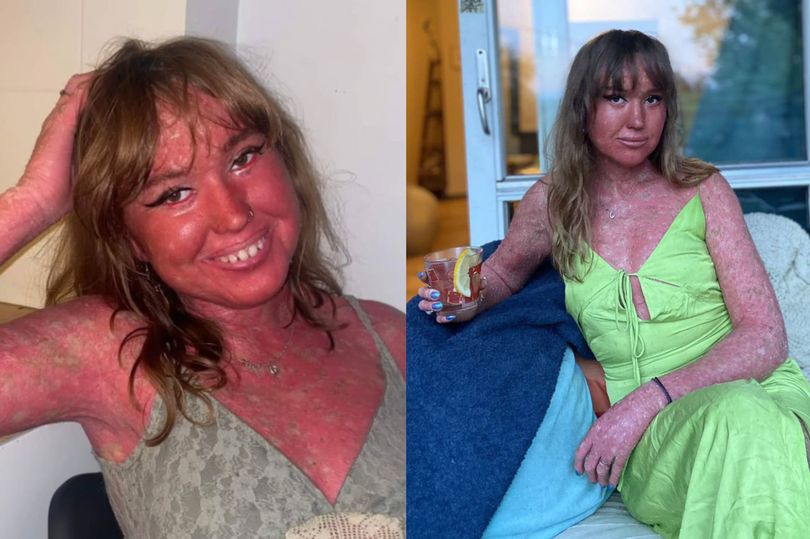
Nathalie Richert, a 25-year-old woman from Kivik, Sweden, lives with a rare skin condition called ichthyosis with confetti (IWC). This condition, which affects only around 40 people worldwide, has presented her with numerous challenges, including discrimination and bullying. However, Nathalie has chosen to embrace her unique condition and find joy in life.
Understanding Ichthyosis with Confetti
IWC causes Nathalie’s skin to grow at an accelerated rate, about seven times faster than normal. This rapid growth results in constant peeling, leaving her skin red, dry, and scaly. The “with confetti” aspect of the diagnosis refers to the patches of normal skin that appear across her body, resembling a blossom pattern, as her body constantly attempts to heal itself.
Nathalie was born with IWC, appearing slightly purple at birth. However, she wasn’t properly diagnosed until she was 13 years old. Before the diagnosis, doctors often misattributed her condition to bacteria or thin skin. Reflecting on her childhood, Nathalie recalled always knowing she was different. “When I was a kid, I could never do things other kids were doing, like sleepovers, because I’d have to do my skincare routine, and I was always in a lot of pain and very stiff.”
Facing Discrimination and Bullying
Growing up with IWC, Nathalie endured significant bullying. Classmates labelled her with cruel names like “tomato,” “monster,” and “disgusting.” Due to her mother’s job, the family moved frequently, exposing Nathalie to different schools and environments. In Spain, she experienced adults staring and pointing, although she tries to remain optimistic, suggesting they may have simply thought she was sunburnt.
One particularly painful incident occurred before her diagnosis when she was 11. On a school trip to a water park, staff asked Nathalie to leave because other customers complained that they didn’t want their children swimming in the same water as her. “I felt really sad when they said that,” she recounts. “I felt like ‘okay… why me? Why can’t I be here?’ To think that people didn’t want to be swimming in the same water as me, that was very difficult.”
Finding Strength and Positivity
Despite these hardships, Nathalie believes her challenging childhood has made her stronger. She also credits her supportive friends for helping her through difficult times. “I’m healthy apart from my condition, which I am very grateful for. Growing up has brought strength and I feel more powerful. I know my rights and I know how to take care of myself.”
Nathalie’s positive outlook is evident in her determination to live life to the fullest. “We only live once, so I try to appreciate everything I have. I am very happy with my life. Conditions will make your life harder, people will say things, but they do not matter.”
The Daily Realities of Living with IWC
Living with IWC involves more than just skin issues. The condition also causes fatigue, joint pain, and, at times, excruciating burning pain that forces Nathalie to spend entire days soaking in a warm bath with Epsom salts to find relief. Furthermore, she is unable to absorb vitamin D naturally and must rely on supplements. Certain triggers, such as consuming sugar, wheat, or dairy, as well as cold weather, can induce painful flare-ups that make it difficult for Nathalie to even get out of bed. While there is no cure for IWC, various treatments can help manage the individual symptoms.
Nathalie’s daily skincare routine is a significant commitment, taking approximately three hours each morning. It includes a bath, shower, scrub, the application of two full-body creams, eye drops, and other necessary steps.
Using Modelling to Empower Others
In 2022, Nathalie shared some photos of herself on a modelling group. This act led to numerous photographers reaching out to her, and she was even able to give back to the IWC community. Someone whose daughter has the same condition contacted Nathalie. She said, “That makes me very happy because I know how hard it was for my mother. I could reassure that lady that her daughter would grow up to be functional and healthy too, which was amazing.”
The modelling experience has also helped Nathalie with her own self-image. “There are many moments when I have bad thoughts and feel insecure but, when I see those pictures, I do feel different, but I feel like I look cool and unique.”
Nathalie’s story is a testament to the power of resilience, self-acceptance, and the importance of embracing individuality. She serves as an inspiration to others facing challenges, proving that it is possible to find happiness and fulfillment despite adversity. Her message is clear: don’t let your condition define you, and always strive to appreciate the beauty in life.